
Last updated August 25, 2026
Free on-site gate assessment - hinges, posts, and your LiftMaster or Nice gate operator checked before anything is quoted
The assessment is free and the quote is the invoice.
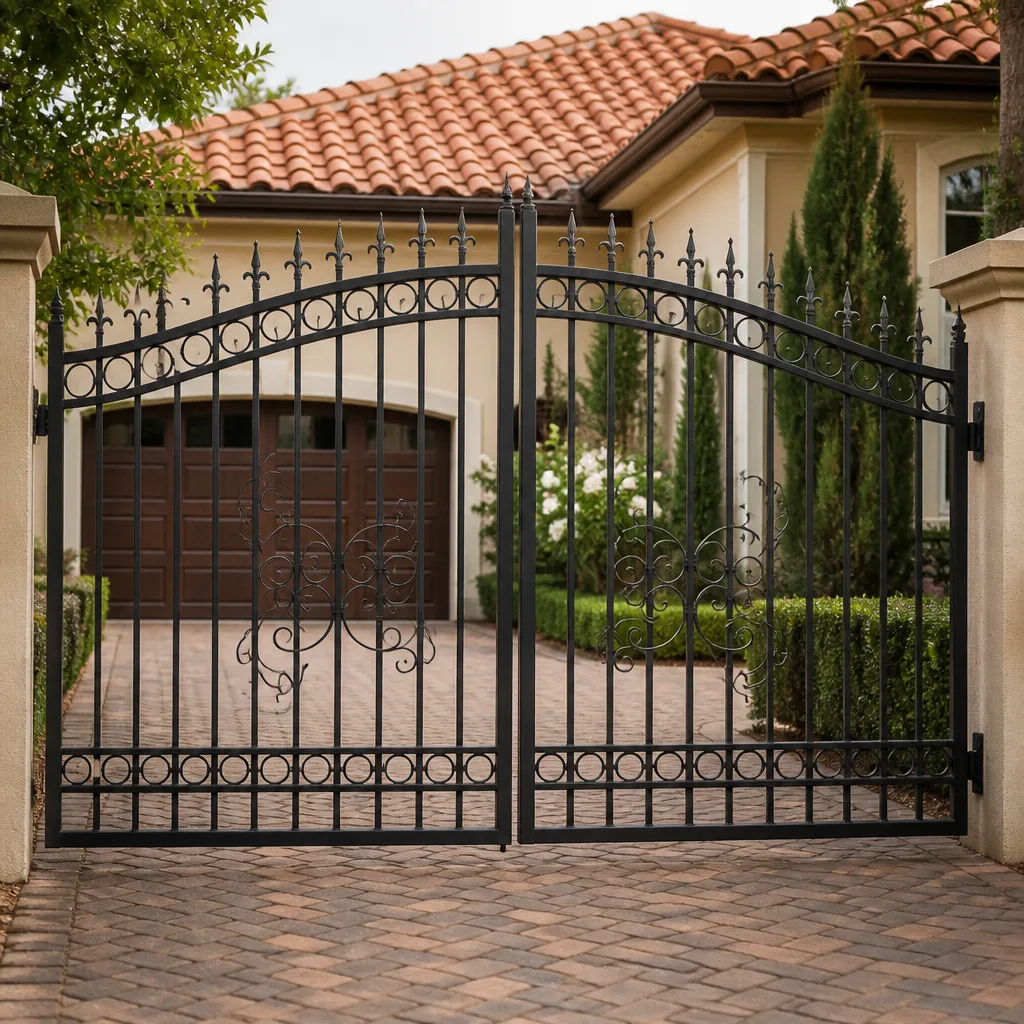
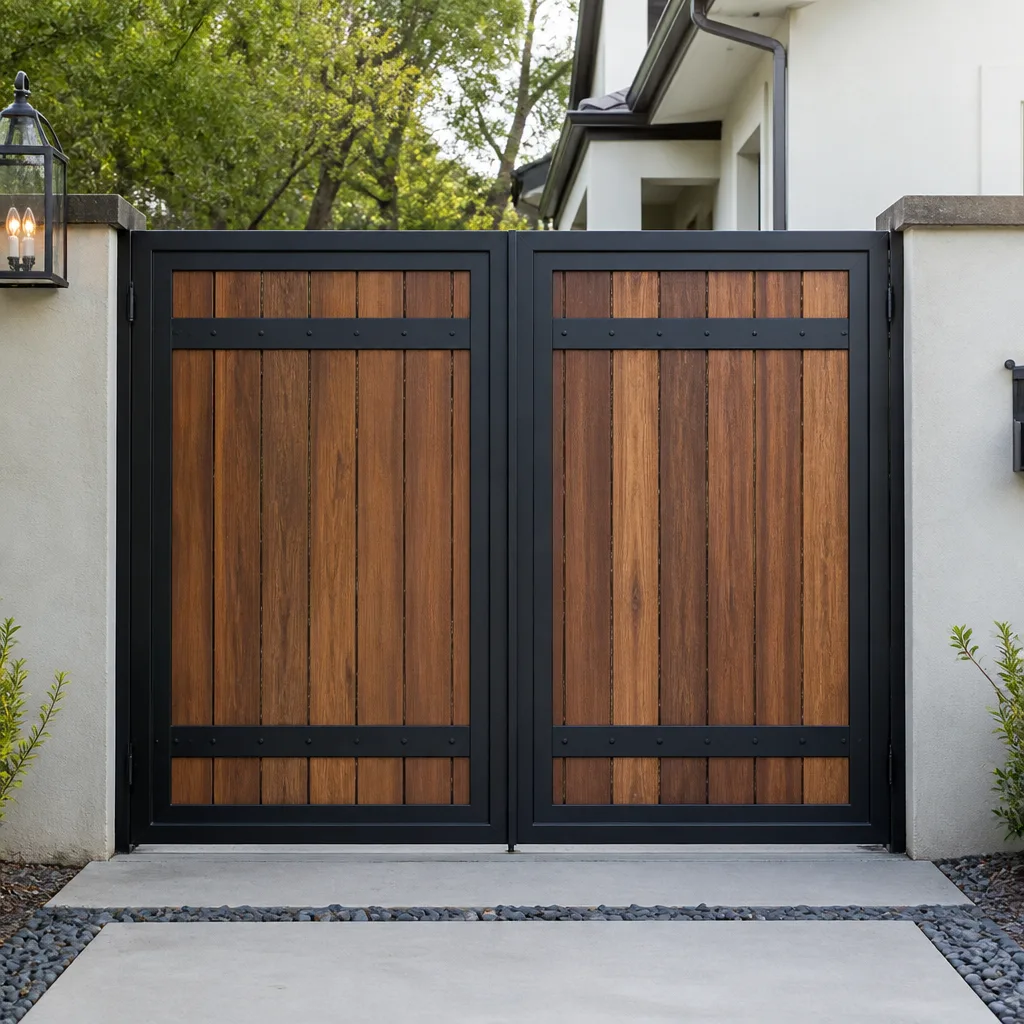
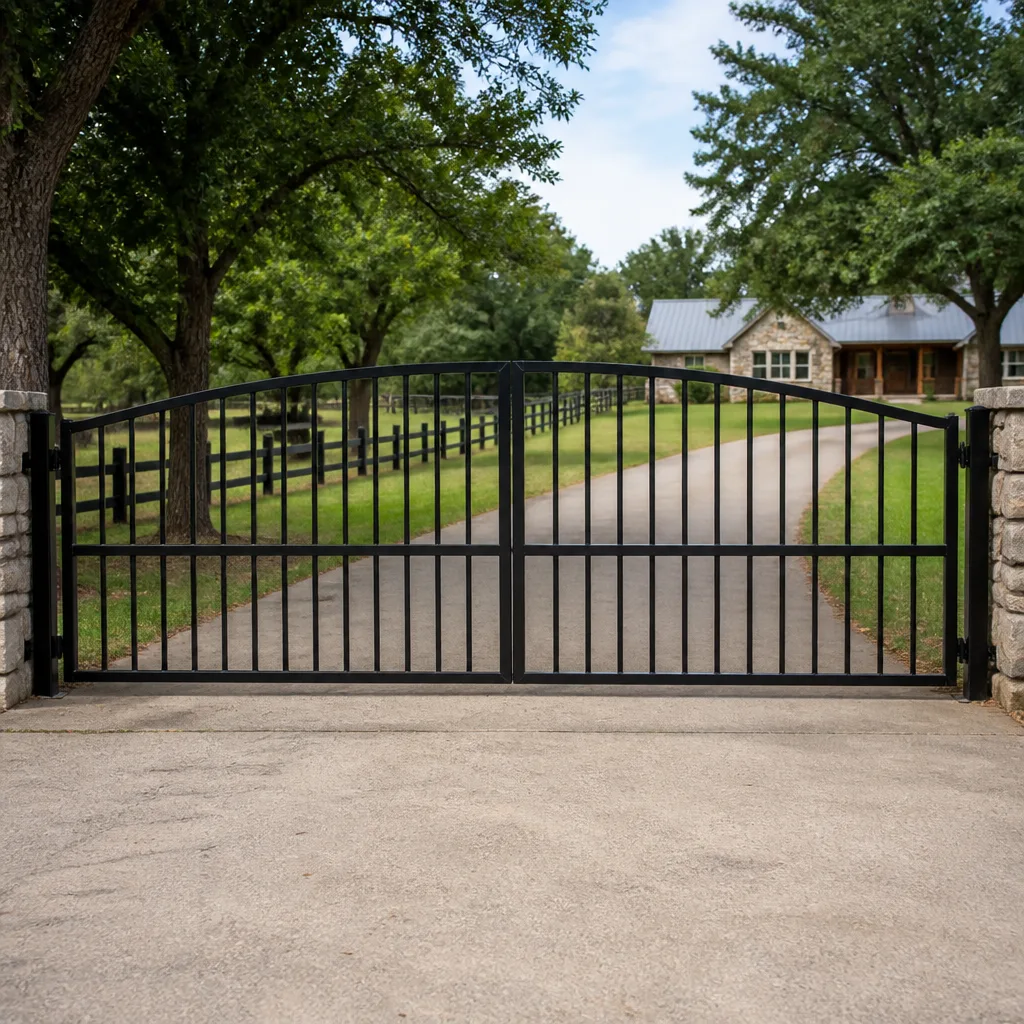
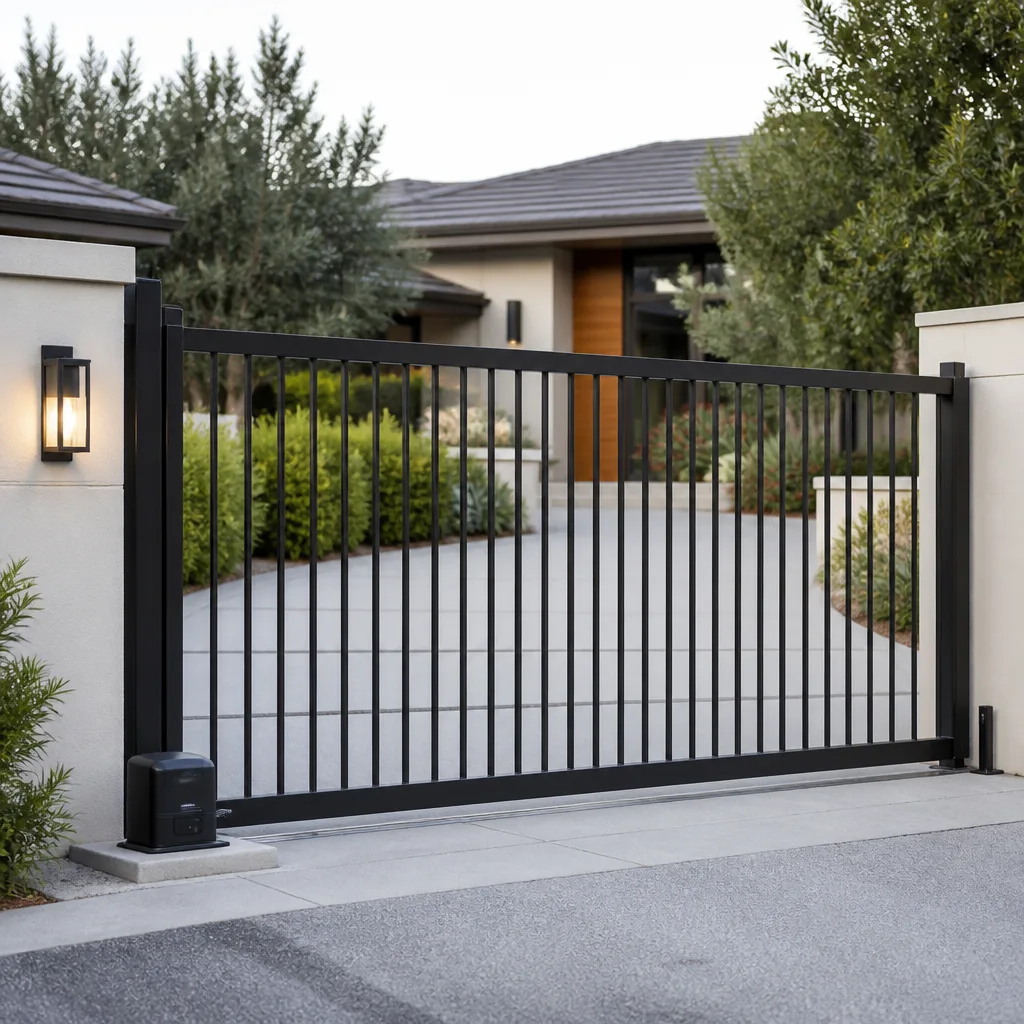
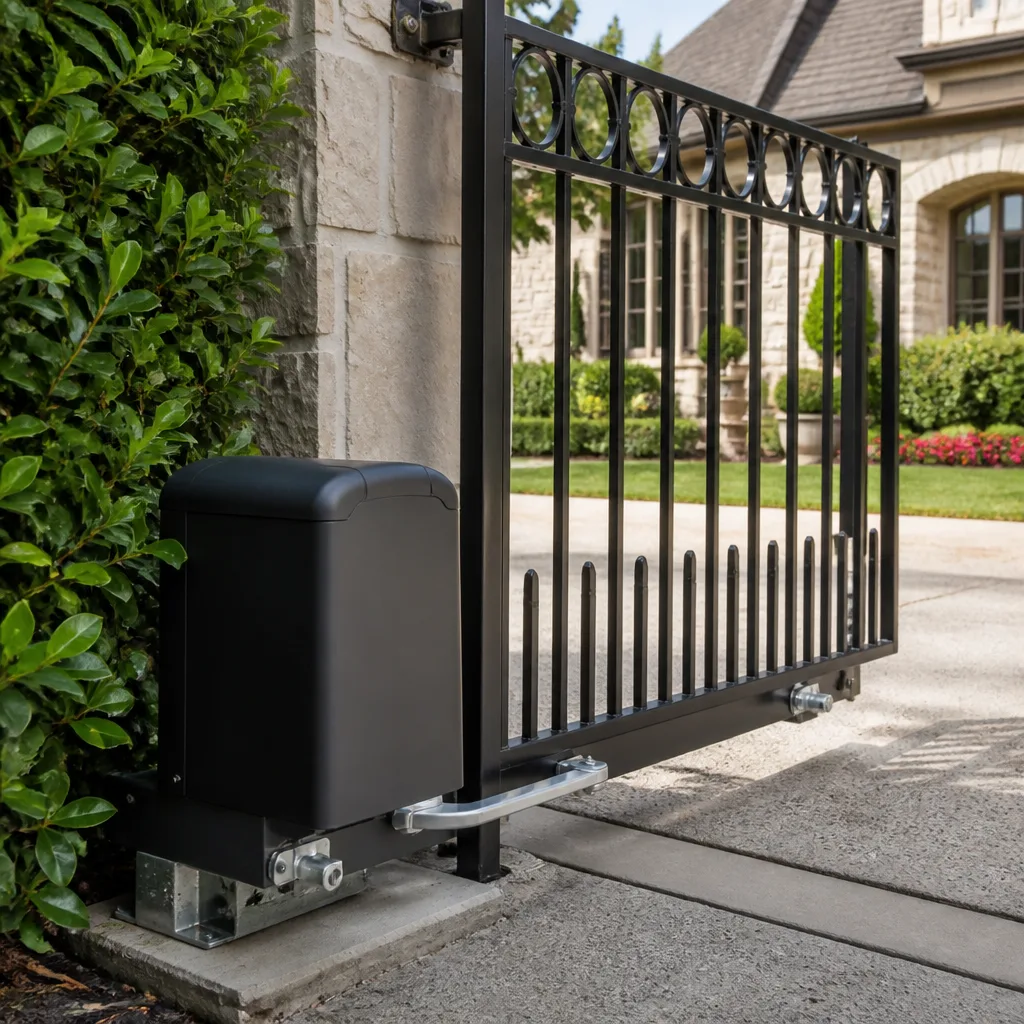
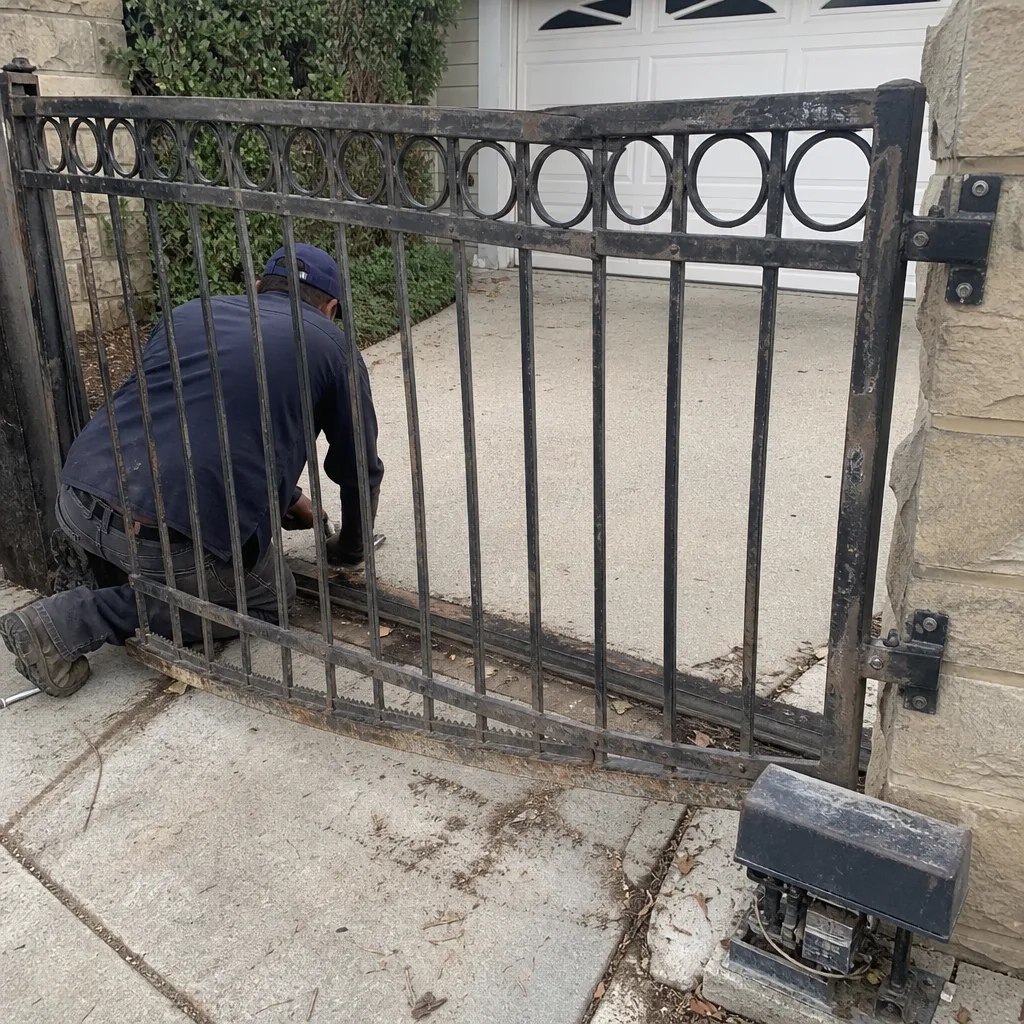 Before
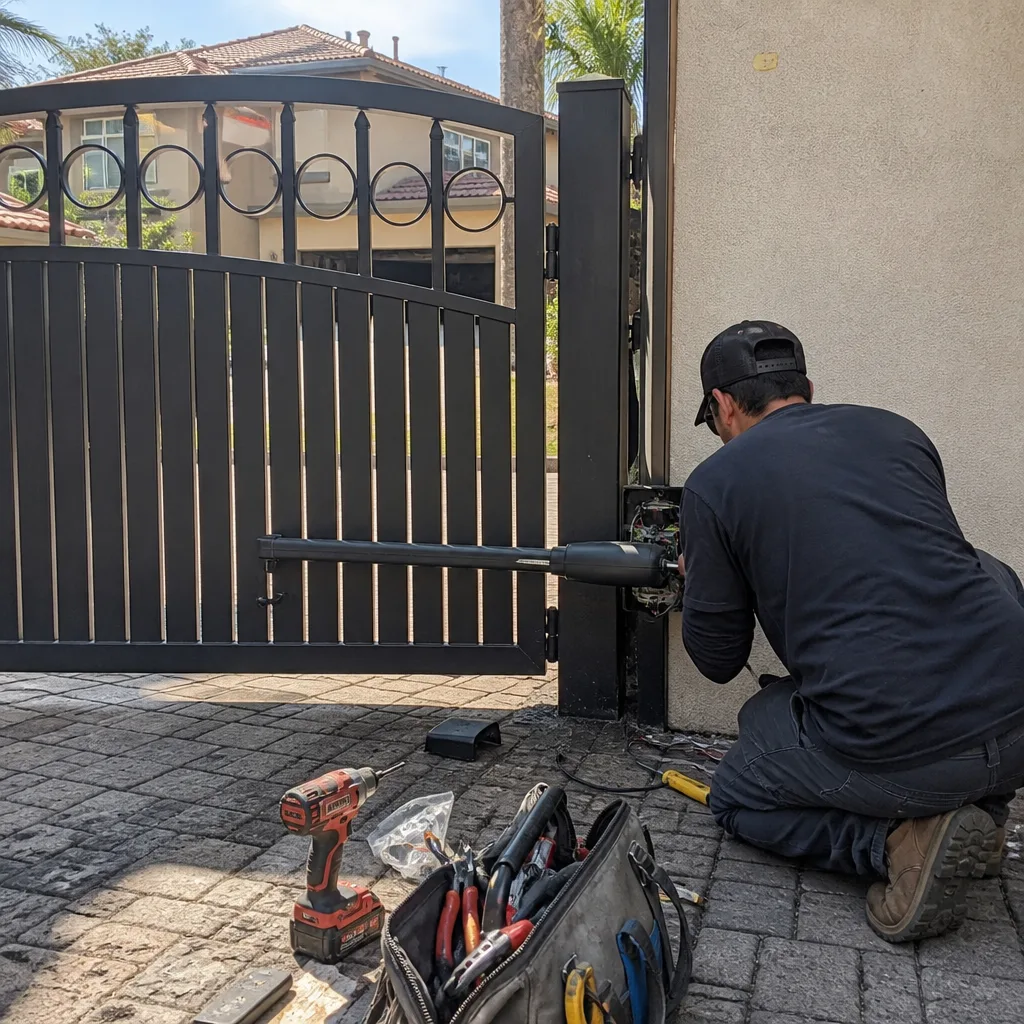 After
After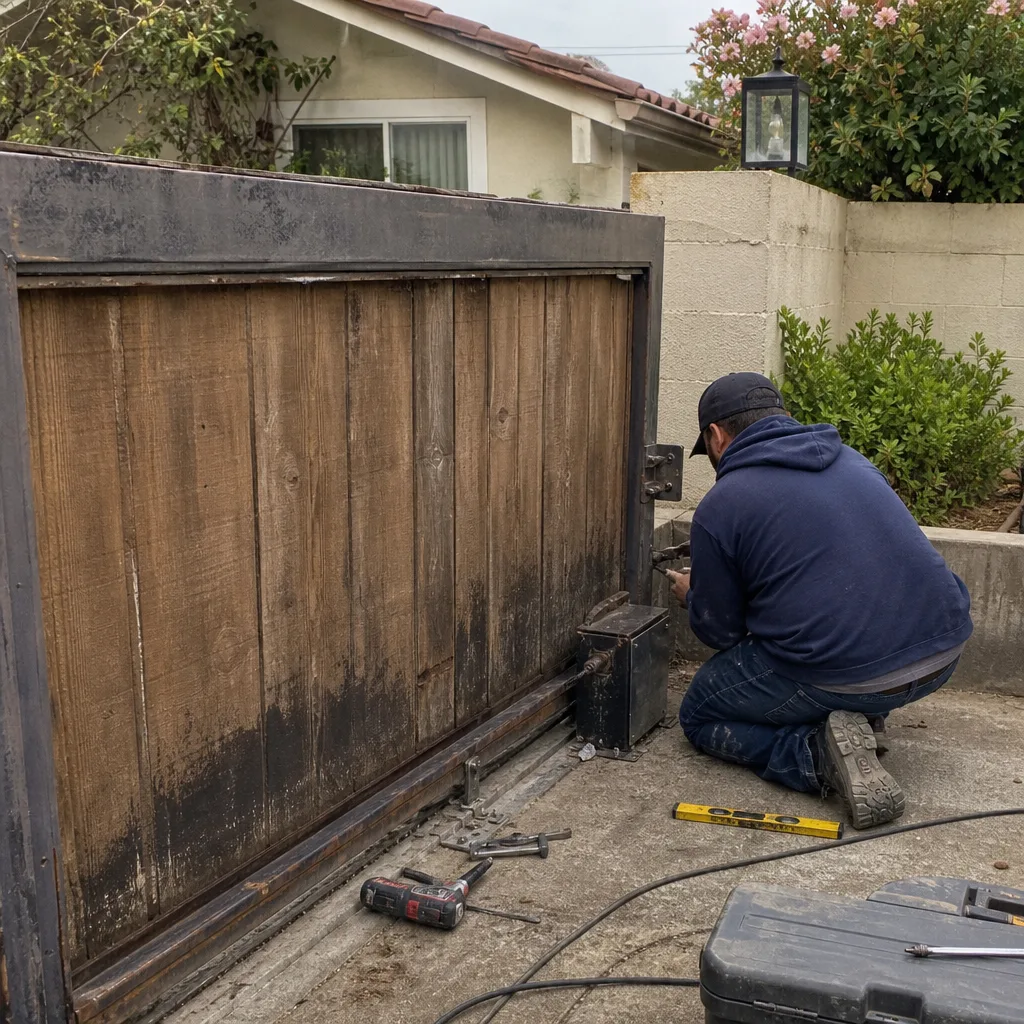 Before
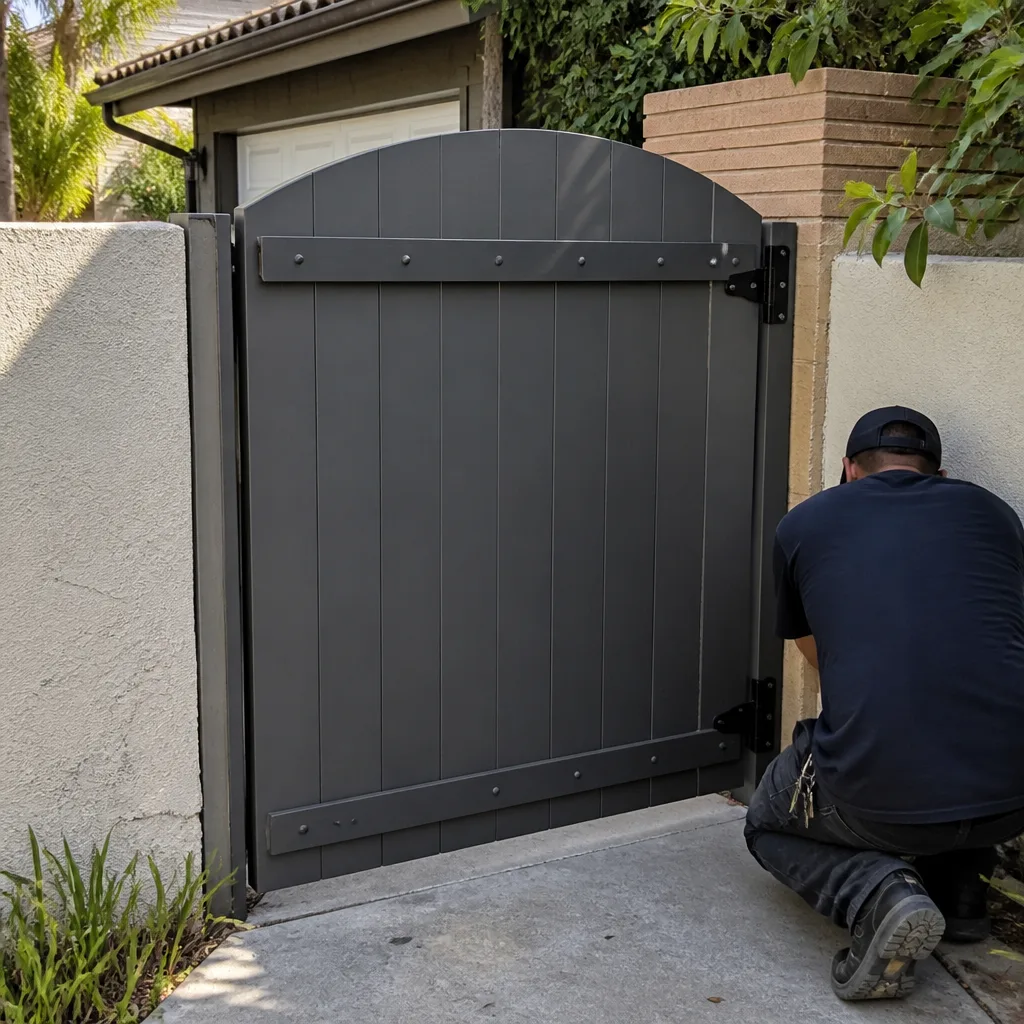 After
After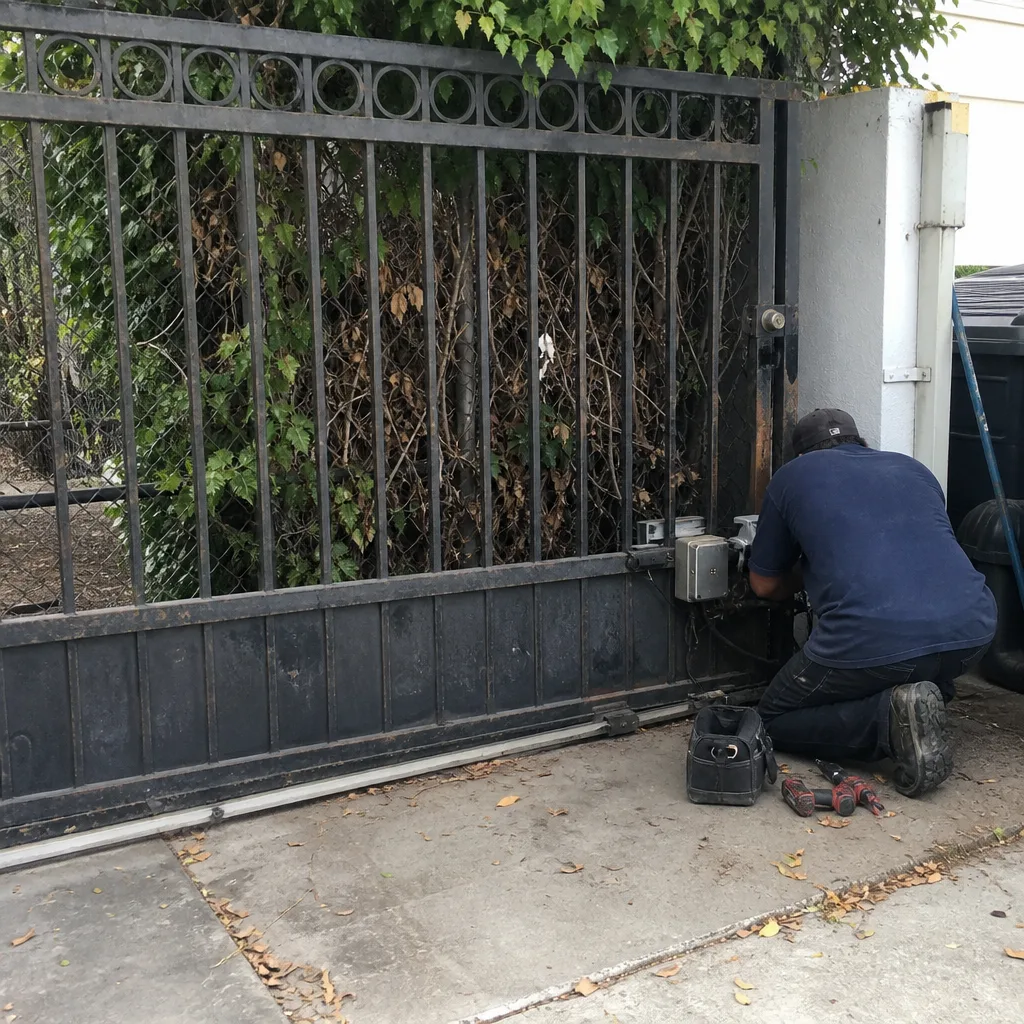 Before
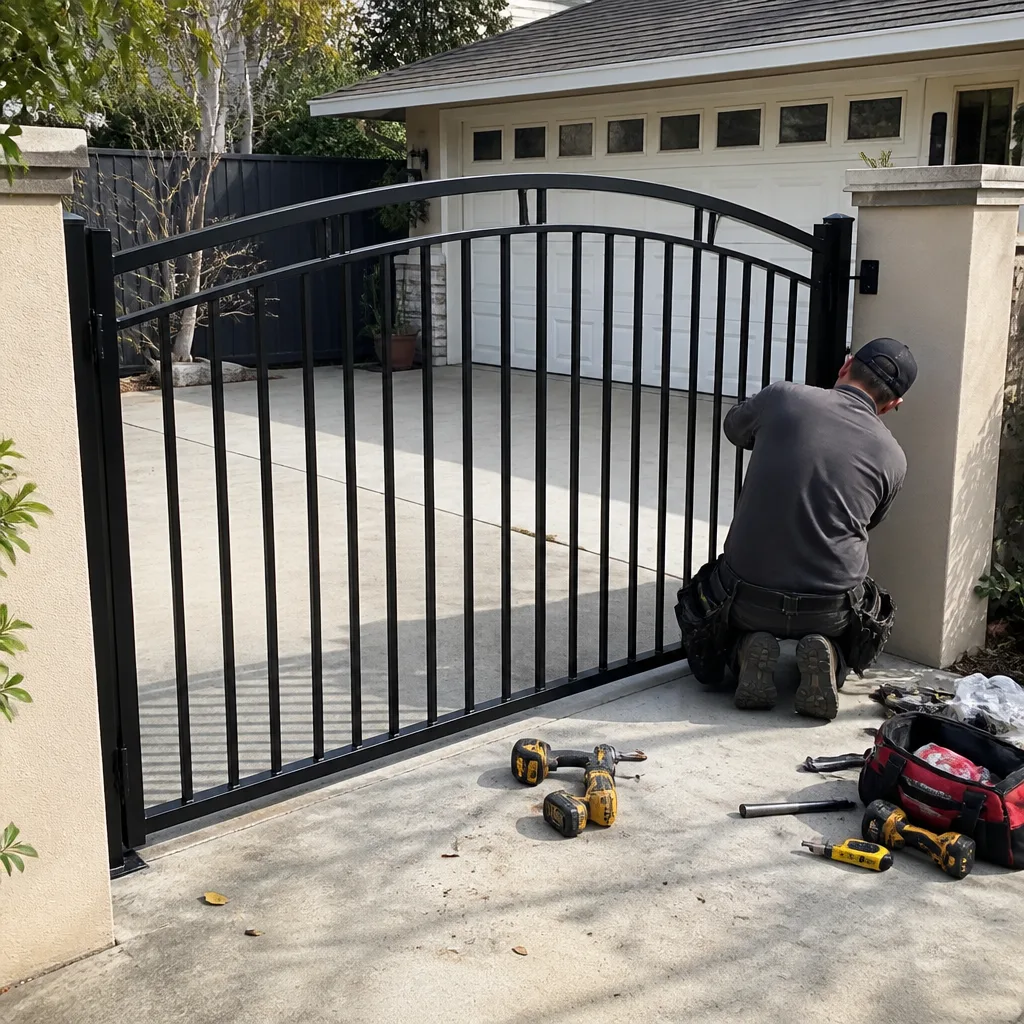 After
AfterGate Repair Permits, Codes & Inspections in CA: What You Need to Know
Most California homeowners don’t discover their gate needs a permit until the inspector is already standing in the driveway. The state’s gate regulations don’t live in one tidy document. They’re spread across the California Building Code, fire marshal rulings, city ordinances, and HOA covenants, and they change depending on whether your gate swings, slides, runs on a motor, or sits on a slope. After four decades of repairing and installing gates across Laguna Hills and Orange County, we’ve learned which questions get asked late, and which ones cost homeowners real money. This guide walks you through the permits, the codes, and the inspection process so you know what you’re dealing with before the first hole is dug.
Quick Answer
Most driveway gates in California require a building permit only when they’re motorized, exceed 7 feet in height, or include masonry pillars. Basic fence-style gates of standard height and manual operation generally fall under exempt work. The codes that govern gate repair and installation come from the California Building Code (CBC), the California Fire Code, and your city’s local amendments, and any gate across an emergency access route or fire lane has stricter requirements. In Laguna Hills, gates must also comply with Orange County Fire Authority access standards and city setback rules.
Table of Contents
- Do You Need a Permit to Repair or Replace a Gate in California?
- California Building Code Requirements for Gates
- Fire Code and Emergency Access Rules
- Gate Automation, UL 325, and Safety Requirements
- The Gate Inspection Process Step by Step
- Laguna Hills and Orange County Local Rules
- HOA Covenants and Gate Restrictions
- What Permits and Inspections Cost
Do You Need a Permit to Repair or Replace a Gate in California?
The short answer is: it depends on the gate’s location, height, and whether it has a motor. California law exempts certain residential fence and gate work from permit requirements under CBC Section 105.2, but the exemptions are narrower than most homeowners assume. A simple repair, like replacing hinges or welding a cracked frame, rarely triggers a permit. Replacing an entire gate with one of the same dimensions and operation typically stays exempt too. The line gets crossed when you change the gate’s footprint, add automation, or build new support structures.
Here’s a practical breakdown of what usually requires a permit:
- Motorized gate installation or retrofit: Any gate with an opener needs a permit in most California jurisdictions. The electrical run, the operator, and the safety devices all fall under code review.
- Gate height over 7 feet: Once a gate or its supporting pillars exceed 7 feet, the structure must be engineered and permitted. This includes the columns, not just the gate leaf.
- Masonry pillars or walls: Brick, block, or stone columns supporting a gate often require permits at 4 feet or higher, depending on the city. Laguna Hills enforces this through its building division.
- New gate across a driveway that affects drainage: If the gate installation changes how water flows across the property line or into the street, the city will want plans reviewed.
- Gates on slopes or retaining walls: In Laguna Hills, where many homes sit on graded lots, a gate mounted to a retaining wall or on a hillside driveway may need an engineer’s stamp.
Repair work, by contrast, stays permit-free in most cases. Replacing a bent track, swapping out a failed opener with an equivalent model, or welding a sagging frame back square does not require a city permit, though the work should still meet code standards. We handle these repairs regularly in Laguna Hills without pulling permits, because the city’s building division treats maintenance as distinct from new construction. The distinction matters: if a contractor tells you a full motorized gate replacement needs no permit, that’s a red flag.
California Building Code Requirements for Gates
The California Building Code treats gates as part of a property’s structural envelope, which means they have to withstand wind load, support their own weight without sagging, and fail safely if something goes wrong. The relevant sections are CBC Chapter 16 for structural design and Chapter 30 for the interface with driveways and pedestrian access. For most residential gates, the practical requirements boil down to three things: structural integrity, safe operation, and unobstructed access.
Wind load is the one that surprises people in Laguna Hills. We’re close enough to the coast that Santa Ana winds hit hard, and a gate that catches wind like a sail puts enormous stress on its hinges and posts. A properly permitted gate will have posts set in concrete to a depth calculated for the gate’s height and width, not just a standard 2-foot hole. In our experience, gates that were never permitted and never engineered are the ones we find leaning after a strong wind season.
Key structural requirements under the CBC:
- Post embedment: Gate posts must be set deep enough to resist overturning. For a 6-foot gate, this typically means 30 to 36 inches of concrete footing, but the exact depth depends on the gate weight and soil type.
- Gate weight and hardware: Hinges and tracks must be rated for the gate’s full weight plus a safety factor. A 400-pound gate hung on hinges rated for 200 pounds will sag and bind within months.
- Clearance and swing direction: A swing gate cannot encroach onto a public sidewalk or the street when open. This rule gets enforced in Laguna Hills neighborhoods where driveways slope up and gates swing outward.
- Pedestrian separation: In many jurisdictions, a gate spanning a driveway needs either a separate pedestrian gate or a safety edge that reverses the gate if it hits someone.
If the gate is part of a perimeter wall over 6 feet, the entire wall-and-gate assembly may need an engineer’s review. We tell homeowners in Laguna Hills to keep their original plans when they have them. A set of as-builts can save thousands on a future remodel.
Fire Code and Emergency Access Rules
The California Fire Code exists to make sure a fire engine can reach your house, and gates are one of the few things that physically stand in the way. Chapter 503 of the fire code requires that any gate across a fire department access road open automatically or be quickly openable by emergency responders. This applies to driveway gates in areas where the home sits more than 150 feet from the nearest public road, which includes many larger lots in Laguna Hills and surrounding Orange County communities.
For motorized gates, the practical requirements look like this:
- Emergency release: Every automated gate must have a manual release mechanism accessible from outside without keys or tools. This lets fire crews disconnect the motor and push the gate open.
- Lockbox access: In some Orange County Fire Authority jurisdictions, gates across access roads need a Knox key switch or lockbox that fire engines can open with a master key.
- Minimum width: A fire access gate must maintain a clear opening of at least 20 feet for fire apparatus, or 12 feet where specifically allowed.
- Backup power: In areas with high fire hazard severity, automated gates may need battery backup so they can still open during a power shutoff.
The Orange County Fire Authority serves Laguna Hills, and OCFA’s standards mirror the state fire code with a few local tightening points. If your gate crosses a designated fire lane or provides the only vehicle access to a back lot, you can expect the OCFA to review the gate’s operation before the city signs off on a final inspection. We’ve seen gates in Laguna Hills pass city inspection and then stall at the fire marshal’s review because the manual release was padlocked or the lockbox was mounted too high for a truck to reach. The fire marshal’s word is final on these.
Gate Automation, UL 325, and Safety Requirements
Any electric gate opener installed in California must comply with UL 325, the national safety standard for automated gate systems. This standard is the reason modern gate openers have so many sensors, and it’s the reason a gate that hits a car or a person is a serious liability problem for the homeowner, not just the installer. UL 325 requires that every automated gate have at least two independent entrapment protection devices: one primary device like a photoelectric sensor or edge sensor, and one secondary device like a reversing motor.
What this means for you:
- Photo eyes: A pair of photoelectric sensors mounted near the gate posts creates an invisible beam. Break the beam while the gate is moving, and the gate must stop and reverse.
- Contact edges: A pressure-sensitive strip on the leading and trailing edges of the gate triggers a reversal if it touches anything. This is the standard protection for slide gates, which have a crushing hazard at the stationary post.
- Reversing motor: Most openers have a motor that senses resistance and reverses direction if it meets an obstacle. UL 325 requires this as a secondary device.
- Warning placards: Automated gates must carry signage warning about operation and entrapment hazards. This is a code requirement, and inspectors check for it.
Brand compatibility matters for code compliance. When a LiftMaster opener gets swapped for a FAAC unit without matching the safety devices to the new control board, the gate can pass a visual check and fail a real safety test. We service repair calls in Laguna Hills where a homeowner’s gate “works fine” but has a dead photo eye or a disconnected edge sensor, which leaves the gate non-compliant and the homeowner exposed. The fix is usually straightforward, but it has to be caught.
One more thing worth stating plainly: high-tension gate springs and heavy gate panels can cause serious injury. If a gate has jumped its track or a spring has snapped, do not attempt to re-tension it yourself. The stored energy in a wound spring can release without warning, and a falling gate leaf weighs more than most people can hold. Call a trained professional. We say this because we’ve repaired the aftermath of DIY attempts, and it’s never worth it.
The Gate Inspection Process Step by Step
Once you have a permit, the inspection process follows a set sequence. Knowing what happens at each step removes the surprises and keeps the project moving. Here’s how it works in most California cities, including Laguna Hills:
- Submit plans and pay fees: For a permitted gate, you’ll need a site plan showing the gate location, property lines, and setbacks, plus a structural plan for the posts and gate. The city reviews this and issues the permit.
- Rough inspection (if applicable): If you’re pouring new footings or piers, the inspector comes out before the concrete goes in. They check post embedment depth, rebar, and footing dimensions. This is the step that gets skipped on unpermitted work.
- Electrical inspection (for automated gates): After the opener and safety devices are installed but before final coverings, the inspector checks wiring, grounding, and the UL 325 compliance of the operator.
- Final inspection: The gate is complete. The inspector verifies operation, swinging direction, clearance, safety device function, and the gate’s overall structural integrity. They’ll test the photo eyes and edge sensors if the gate is automated.
- Fire marshal sign-off (when required): If the gate crosses a fire access route, the fire marshal completes a separate inspection before the city closes the permit.
Most residential gate repairs in Laguna Hills never reach step one, because they’re classified as maintenance. But any full replacement with a new opener should go through the full sequence, and a reputable installer will tell you that up front. A contractor who offers to skip the permit on a motorized gate installation is saving you a few hundred dollars now and risking a lien on your home’s title later, because unpermitted work must be disclosed when you sell.
Laguna Hills and Orange County Local Rules
Laguna Hills sits within Orange County’s building jurisdiction, and the city enforces its own municipal code on top of the CBC and fire code. Setback rules are the common point of friction. The city requires that gates and their support structures sit back from the property line a specified distance, which varies by zone. A gate that sits closer than the setback allows can trigger a correction notice even if the gate itself is well-built.
Laguna Hills also has specific rules about the visual character of front gates. Many neighborhoods in the city were developed with a consistent architectural style, and the city’s design guidelines discourage gates that block view corridors or create a fortress-like frontage. This catches homeowners who want a taller gate for privacy. In our experience serving Laguna Hills, a gate over 6 feet at the front setback line will nearly always require design review, not just a building permit.
Climate is a real factor here. Laguna Hills gets hot, dry summers and Santa Ana winds in the fall. Metal gates expand and contract with temperature swings, and we see more track-binding and hinge-seizing problems here than in coastal cities a few miles west. Powder coating and stainless steel hardware hold up measurably better than raw steel or cheap plating. If a gate is going to be permitted and inspected, using weather-appropriate materials from the start means the gate passes inspection and stays functional for a decade or more.
The hillside areas of Laguna Hills also present a grading challenge. A gate installed on a sloped driveway needs its track or posts set level, which often means concrete pads or stepped footings. The inspector will check that water drains through and around the gate assembly without pooling. We’ve corrected several installations where a gate looked straight but sat in a puddle every winter, and the rust followed within two years.
HOA Covenants and Gate Restrictions
Laguna Hills has a significant number of HOA-governed communities, including Nellie Gail Ranch and other larger developments. HOA rules operate in parallel with city codes, and they can be stricter. A gate that passes city inspection can still violate a covenant restriction, and HOAs in California have the authority to enforce design standards through fines and legal action.
Common HOA gate restrictions we see in Laguna Hills:
- Height limits: Many HOAs cap front gates at 4 or 5 feet, well below the city’s 7-foot permit trigger. You won’t need a city permit for a 5-foot gate, but you will need HOA approval.
- Material and color rules: Neighborhoods with a unified look often require wrought iron or powder-coated steel in a specific color palette. A wooden gate in a community that requires iron will get flagged.
- Setback and visibility requirements: Some HOAs require gates to be set back far enough that a car can pull off the street without blocking traffic. This pushes the gate further from the curb than the city requires.
- Approval process: Most HOAs require an application and design review before any gate work starts. The approval can take 30 to 60 days. Factor that into the project timeline.
The order of operations is HOA first, then city permit. If the HOA rejects a design, there’s no point pulling a city permit for it. We coach Laguna Hills homeowners through this sequence regularly, and the extra paperwork is worth it: an unapproved gate can become a title defect when the house sells, which makes a permit look simple by comparison.
What Permits and Inspections Cost
Permit fees for gate work in California are modest compared to the cost of the gate itself, but they add up when engineering and inspections are included. Here’s what homeowners in Laguna Hills can typically expect:
| Item | Typical Cost Range |
|---|---|
| City building permit (residential gate) | $150 – $400 |
| Plan review fee | $80 – $200 |
| Structural engineer’s stamp (if needed) | $300 – $800 |
| Fire marshal review (if required) | $100 – $250 |
| Inspection fees (per visit) | $75 – $150 |
| HOA design review (varies by community) | $50 – $300 |
These are the permitting costs. The gate itself is a separate budget line. A basic manual iron gate for a Laguna Hills driveway starts around $1,500 installed. A motorized gate with a LiftMaster or FAAC opener, safety devices, and electrical work runs $4,000 to $8,000. Elite and Mighty Mule openers sit at different price points depending on the model and whether the gate is swing or slide.
The permit fee is never the expensive part. What costs real money is fixing an installation that was done without permits and then discovered. That work has to be torn out, inspected after the fact, or disclosed at sale. The permit is a small insurance policy against that outcome.
Common Mistakes to Avoid
- Skipping the permit on a motorized gate: The most expensive mistake we see. An unpermitted opener installation becomes your problem at resale, and the fix usually costs triple what the permit would have.
- Mounting a heavy gate on light posts: A 6-foot wrought iron gate weighs 200 to 400 pounds. Posts installed to fence standards, not gate standards, will lean and bind within a year or two.
- Ignoring the swing direction: California code forbids a gate that swings over a public sidewalk or into the roadway. We see this corrected at final inspection more often than any other single issue in Laguna Hills.
- Disconnecting a safety device to stop false reversals: When a photo eye starts triggering randomly, the temptation is to bypass it. That creates a non-compliant gate and real liability if someone gets hurt. The correct fix is to realign or replace the sensor.
- Choosing a gate without drainage during wet months: Laguna Hills gets brief but intense winter rains. A gate whose posts sit in standing water rusts from the bottom up, and the inspector will flag any installation that blocks site drainage.
- Assuming HOA approval is automatic: HOAs in Laguna Hills reject gate applications regularly. Get written approval before buying materials or scheduling installation.
- Using unrated hardware: Hinges, rollers, and tracks must match the gate’s weight rating. Hardware that works on a 100-pound pedestrian gate will fail on a 400-pound driveway gate.
When to Call a Professional
Some gate work is genuinely DIY-able: lubricating hinges, tightening bolts, replacing a keypad battery. The line sits at anything involving a motor, a spring, a track, or a structural component. If a gate is binding, dragging, or not closing square, the fix usually involves adjusting weight distribution or track alignment, which is work that benefits from a trained eye and the right tools. If a gate opener has been hit by a car, the resulting frame twist often looks minor but throws the whole geometry off. These are the calls we take in Laguna Hills where fifteen minutes of diagnosis saves the homeowner a full replacement. If the gate is motorized, the opener is controlled by a logic board, and reaching under the gate while it’s powered is a serious crush hazard. That’s a professional’s job. Ironworks Gate Co. offers free estimates in Laguna Hills. Call (213) 587-4828 and we’ll come look at the gate, quote a written price before any work starts, and let you know whether the job needs a permit or can proceed as a straight repair.
Frequently Asked Questions
No, if the replacement gate matches the original dimensions, height, and operation. Replacing a manual gate with another manual gate of similar size is exempt maintenance work in most California jurisdictions. A permit becomes necessary when you change the gate’s height, add automation, install masonry supports, or move the gate’s location.
A residential gate permit in Laguna Hills typically runs between $150 and $400, with plan review and inspection fees adding another $150 to $350 depending on the scope. If an engineer’s stamp is needed for a hillside installation, budget an additional $300 to $800. Call (213) 587-4828 and we can walk you through exactly what your project will need.
California code requires that automated gate systems be installed to UL 325 standards, which includes proper wiring, grounding, and entrapment protection. The physical installation is only half the job; the safety device programming and testing are what an inspector verifies. A DIY opener installation on a heavy driveway gate carries crush-hazard risks, and getting the safety compliance wrong creates liability for you as the homeowner. This is a job for a trained professional.
The Orange County Fire Authority requires that any gate across a fire access route have a manual release that works from outside without tools, a minimum clear opening width for fire apparatus, and in some cases a Knox lockbox for keyed access. If your Laguna Hills property sits more than 150 feet from the public road, your gate likely falls under fire code review.
If you’re swapping an old opener for a new one of the same type and voltage, this is typically a repair and not a permit-triggering installation. The work still needs to meet current UL 325 safety standards, which often means adding photo eyes or edge sensors that weren’t required when the original opener was installed. We handle these repair swaps regularly in Laguna Hills and make sure the safety devices are brought current.
Simple residential gate permits in Laguna Hills can be issued in one to two weeks if the plans are complete. A permit that requires fire marshal review or structural engineering will take three to six weeks. HOA approval, where required, runs in parallel and can add 30 to 60 days. Starting the paperwork early keeps the project on schedule.
The Bottom Line
California gate rules live at the intersection of building code, fire code, city ordinances, and HOA covenants. A manual gate of standard height rarely needs a permit. A motorized gate almost always does. The permit process exists to make sure your gate won’t blow over in a Santa Ana wind, trap someone who leans against the wrong post, or block a fire engine from reaching your front door. In Laguna Hills, the process has local quirks: setback rules, design review, hillside grading, and the Orange County Fire Authority’s access standards. None of it is complicated once you know the sequence. The simplest path is to get an honest assessment before you start. Ironworks Gate Co. has worked on gates across Laguna Hills and Orange County for over four decades, and we tell every homeowner the same thing: we’ll give you a straight answer, a written price before any work begins, and a 90-Day Done Right Promise after the job is finished. Call (213) 587-4828 for a free estimate. A live person answers, day or night.
Written by Victor Salinas, Owner at Ironworks Gate Co., serving Laguna Hills since 2013.