
Last updated August 25, 2026
Free on-site gate assessment - hinges, posts, and your LiftMaster or Nice gate operator checked before anything is quoted
The assessment is free and the quote is the invoice.
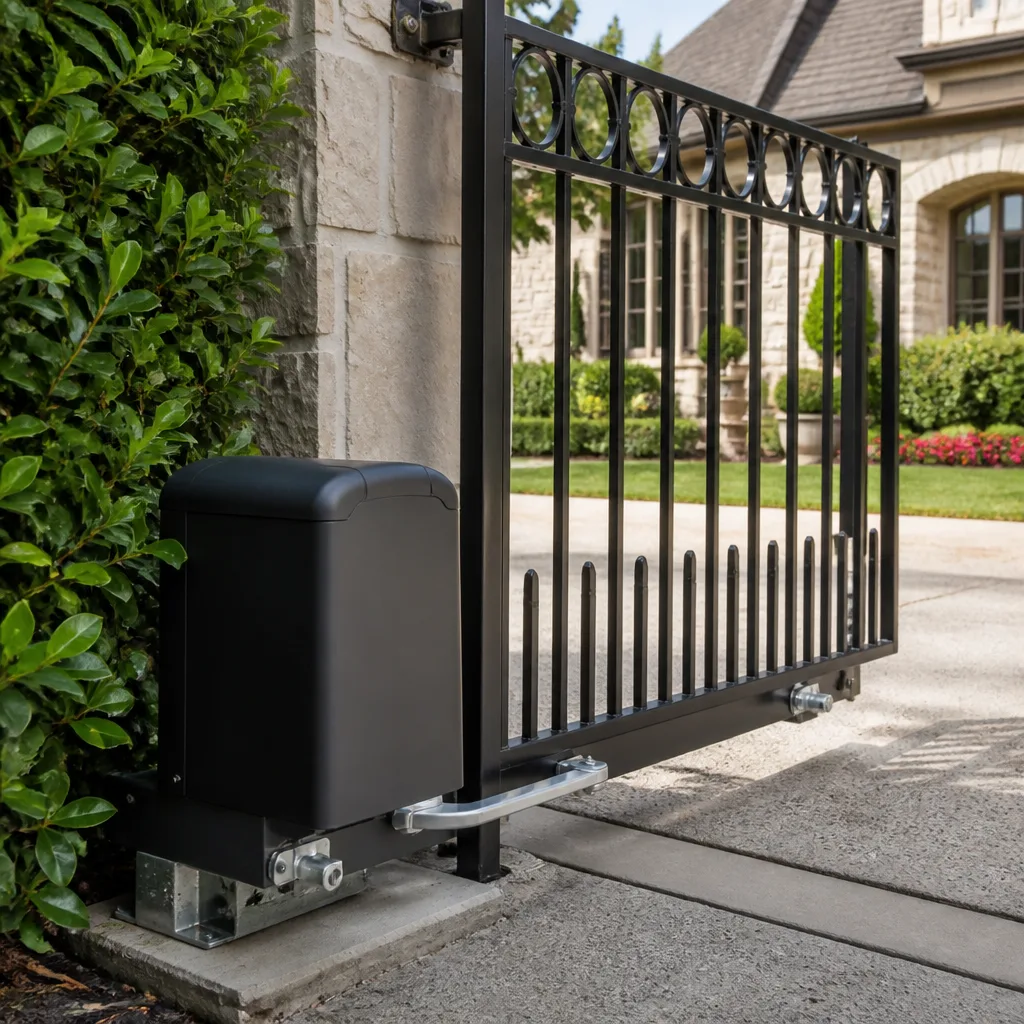
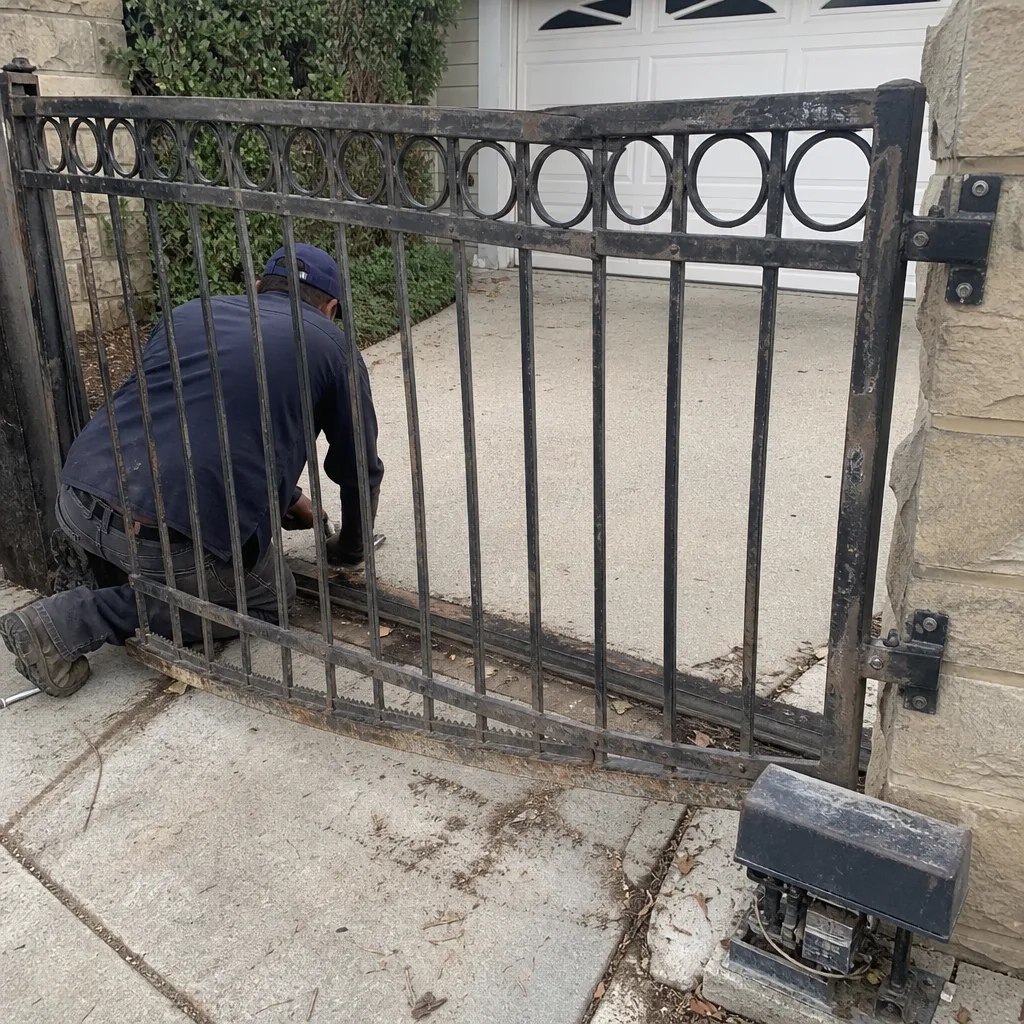 Before
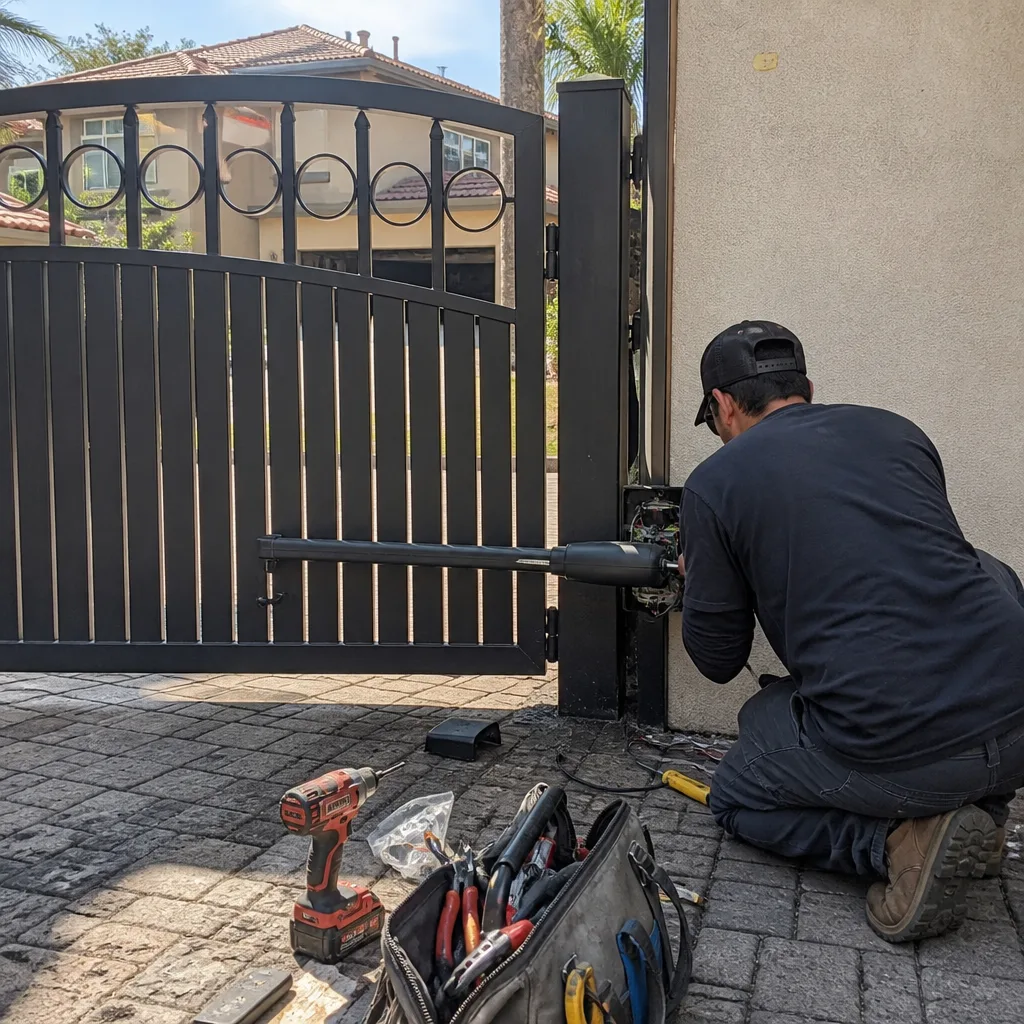 After
After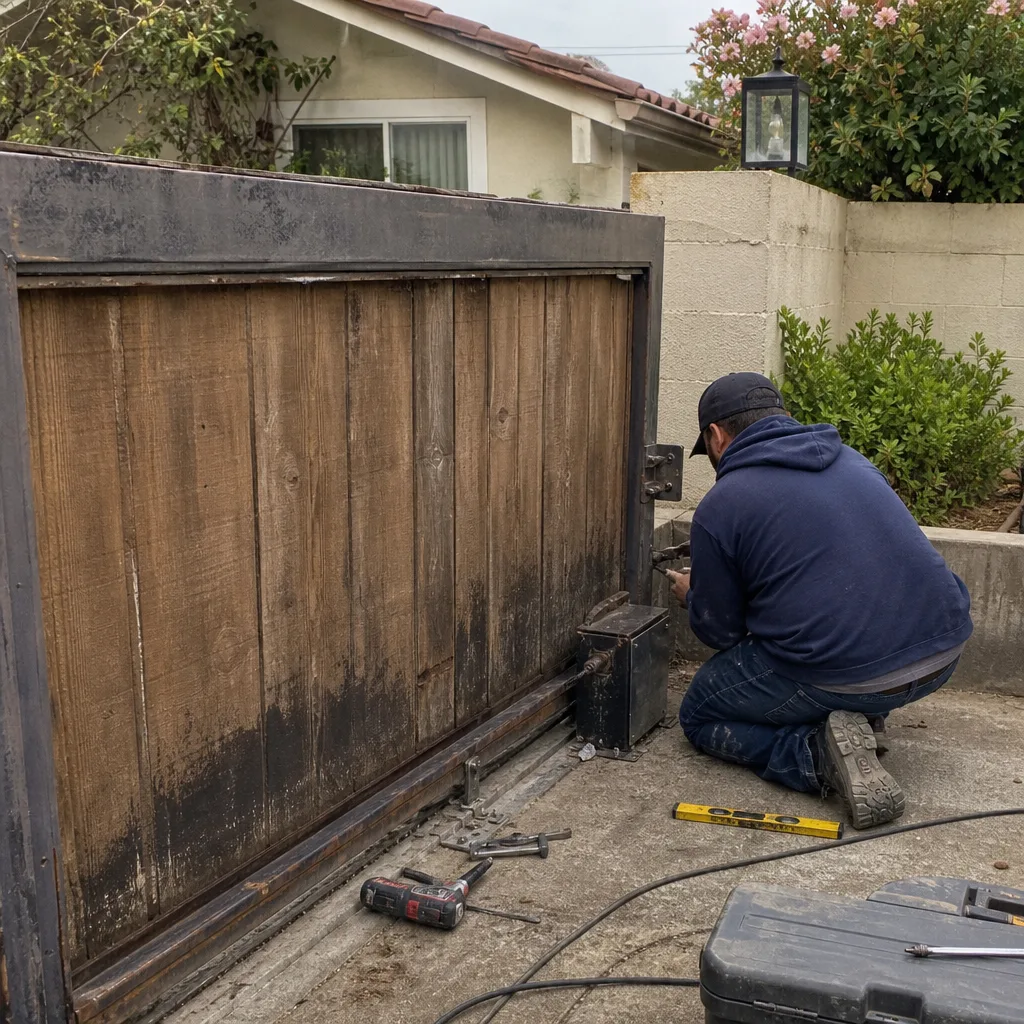 Before
 After
After Before
 After
AfterSeasonal Gate Repair Care for Laguna Hills: Year-Round Homeowner’s Guide
Most homeowners in Laguna Hills replace a gate motor twice before they realize the first one didn’t die of old age. It died of neglect. A gate that gets a 20-minute seasonal checkup lasts 8 to 12 years. A gate that gets none lasts 4 to 6. The difference is never the brand stamped on the motor. It’s whether anyone ever cleaned the photo-eye lenses, tightened the hinge bolts, or caught a dying capacitor in September instead of January. This guide walks you through what your gate needs, season by season, so you can stop paying for emergency calls and start catching small problems before they become driveway-sized ones.
Quick Answer
Seasonal gate care in Laguna Hills means four 20-minute checkups a year: clean the track and photo-eyes, tighten hardware, test the safety reverse, and inspect for rust after the marine layer season. Most gate failures we see are caused by neglect of these four items, not by the age of the motor. A $89 seasonal tune-up once or twice a year prevents about 80% of the emergency repairs homeowners call us for between June and December.
Table of Contents
- Spring Gate Care After the Rainy Season
- Summer Heat and Gate Motor Strain in Laguna Hills
- Fall Tune-Up Before the Holidays
- Winter Marine Layer and Cold Morning Failures
- The Coastal Air Factor: Rust and Corrosion in Laguna Hills
- Safety Checks You Should Do Every Season
- Common Mistakes to Avoid
- When to Call a Professional
Spring Gate Care After the Rainy Season
Spring is the season of reckoning for Laguna Hills gates. The winter rains have washed grit into every track, hinge, and bearing surface. If your gate is sliding, that grit is now grinding against the rollers every time it opens. If it’s swinging, the rain has swollen the wood (if you have a wood gate) or accelerated oxidation on any exposed steel. Spring is when you clean. It’s also when you look for damage that happened while nobody was watching.
In our experience, spring is the single most productive tune-up of the year. A gate that gets cleaned and adjusted in March or April sails through the rest of the year. A gate that skips spring cleaning limps into summer with a strained motor and a binding track.
Here’s what a proper spring gate care routine includes:
- Wash the track and rollers. Use a hose first to flush loose grit, then a stiff brush. For sliding gates, pay attention to the V-track groove at the bottom. Debris packs into the groove and the wheels ride up and over it, which throws the gate out of level and strains the motor.
- Clean the photo-eye lenses. Rain splashes soil onto the safety lenses, and a dirty photo-eye is the number one cause of a gate that refuses to close or reverses for no reason. A soft cloth and a little glass cleaner fixes this in under a minute.
- Lubricate the moving parts. Hinges, rollers, and the chain or belt on the opener. Use a dry silicone spray or white lithium grease. In Laguna Hills, avoid heavy oils that attract dust and turn into grinding paste by July.
- Check every bolt and lag screw. Rain causes wood to swell and contract, which loosens hardware. A two-minute walk with a wrench now prevents a sagging gate leaf in the fall.
- Test the manual release. Every automatic gate has a release mechanism for when the power goes out. Pull it, swing or slide the gate by hand, and re-engage the motor. If you’ve never done this, check the manual. If it’s stiff or won’t re-engage, that’s a sign the motor carriage needs service.
Spring is also the right time to address any rust spots that appeared over the winter. More on that in the coastal air section below.
Summer Heat and Gate Motor Strain in Laguna Hills
Summer in Laguna Hills runs hot, and heat is the stealth killer of gate electronics. The capacitor inside your opener is a small cylinder that stores the electrical burst needed to start the motor. Capacitors have a rated lifespan measured in hours at a given temperature. Every 10 degrees above that rating cuts their life roughly in half. A motor box sitting in direct afternoon sun on a 95-degree day can run 130 degrees inside. That’s why so many gate motors fail in August and September, not in the winter cold.
Summer gate care is about reducing heat load and catching electrical problems before the circuit board cooks itself.
- Check for direct sun on the motor housing. If your opener’s control box faces south or west and gets baked all afternoon, consider a simple sun shade. We’ve seen a $40 shade panel add three years to a gate motor’s life in Laguna Hills neighborhoods like Moulton Ranch and Nellie Gail.
- Listen for a change in sound. A motor that hums louder in the summer or sounds like it’s laboring is telling you the gate is binding. Heat expands metal. A gate that clears its posts comfortably at 70 degrees can rub or stick at 95. If you notice the gate slowing down or pausing mid-travel, don’t wait. The motor is working harder than it should, and harder work means more heat, and more heat means a shorter life.
- Check the battery backup. If your opener has a battery backup (common on LiftMaster and FAAC units), summer’s higher temperatures shorten battery life. A battery that’s more than three years old and lives in a hot motor box is often dead by September, which means your gate won’t open when SCE shuts off power during fire season.
- Keep the motor area clear. Bushes, stacked pavers, stacked firewood against the motor box all trap heat. Give the opener room to breathe.
We’ve also seen a distinct seasonal jump in capacitor failures in Laguna Hills in late August and early September, after two solid months of peak heat. If your gate opens fine but the motor just clicks, or it opens halfway and stops, that’s often a capacitor on its way out. It’s a $100-ish fix if you catch it early. It’s a full motor replacement if you keep cycling the gate through the failure for a month. The fix is quick, and we carry capacitors for all nine major brands we service on the truck, including LiftMaster, FAAC, and Mighty Mule.
Fall Tune-Up Before the Holidays
Fall is when we get the most calls from Laguna Hills homeowners whose gate died right as their kids came home for Thanksgiving. The timeline is predictable: the gate struggled through summer, the weather cooled and metal contracted, things shifted slightly, and one morning the gate just stops. A fall tune-up is the single most effective thing you can do to avoid standing in the driveway with a car full of groceries and a gate that won’t move.
Fall care is about preparation. You’re getting the gate ready for the shortest days and heaviest use of the year. Here’s the sequence:
- Run a full open and close cycle and watch carefully. Does the gate hesitate at any point? Does it slow down or speed up? Does it make a sound you haven’t heard before? Every one of those is a clue. Most of the time, what you’re noticing is a mechanical issue starting, not an electrical one.
- Inspect the chain or belt tension. Chain-drive openers stretch over time. A loose chain slaps and jumps on the sprocket, which wears both. A belt that’s too tight strains the drive pulley. The right tension gives slightly when pressed, but doesn’t sag.
- Check the limit switches. These tell the motor where “open” and “closed” are. If your gate has been banging against the closed stop or leaving a gap, the limits need adjustment. This is a simple adjustment on most LiftMaster, Elite, and Ghost Controls units, but it’s also the adjustment homeowners most often get wrong.
- Lubricate again. Fall is dry in Laguna Hills, and dry bearings wear fast. A second round of lubricant, focused on the chain and the pivot points, sets the gate up for the winter.
- Check the keypad and battery. Keypads get used heavily during the holidays when family and visitors arrive. Fresh batteries now mean no one is stuck at the keypad on Christmas Eve.
If you don’t have time for a full fall inspection, call us for the $89 Seasonal Tune-Up. We can usually schedule it within a few days, and the whole visit takes about an hour.
Winter Marine Layer and Cold Morning Failures
Laguna Hills doesn’t get snow, but it gets something that’s harder on gates than most people realize: the marine layer. From May through July, and again on winter mornings, the cloud deck rolls in overnight and leaves everything damp. Gates, hinges, circuit boards, and photo-eyes all collect condensation. And water, over time, does what water does.
Winter is when we see:
- Corroded circuit boards. Condensation gets inside the control box, and when the board warms up during the day, the moisture accelerates oxidation on the solder joints. The failure presents as intermittent problems at first: gate opens sometimes, not others, or the remote works from the kitchen but not the driveway.
- Stiff or frozen rollers. Moisture creates rust on the bearing surfaces. Rollers that turn freely at 70 degrees can bind at 45. The motor compensates, and now you’re paying for electricity and wear that shouldn’t be happening.
- Photo-eye fogging. Morning condensation inside the photo-eye lens is common. Warm air inside the housing, cool damp air outside, and the lens fogs from the inside. The gate reverses or refuses to close, and the homeowner thinks the opener is broken. It usually clears by mid-morning, but if it happens every day, the photo-eye housing has a seal problem.
- Cold starts that trip the breaker. A motor that works fine most of the year may surge on the first cold morning, drawing higher start-up current and tripping the gate’s breaker or GFCI. If you’re resetting the breaker every cold morning, the capacitor is weak and the motor is struggling.
The fix for winter gate problems in Laguna Hills is straightforward: keep the control box dry, keep the moving parts lubricated with a moisture-resistant product, and don’t ignore a gate that misbehaves only on cold or foggy mornings. That’s the gate telling you something specific, and the message is usually “service me before I fail completely.”
The Coastal Air Factor: Rust and Corrosion in Laguna Hills
Laguna Hills sits inland enough that most homeowners don’t think of themselves as coastal. But the marine layer reaches us more often than not, and the air carries salt. That salt settles on metal and accelerates rust. A powder-coated steel gate in Laguna Hills will show rust at the welds and bolt holes within 5 to 7 years if never treated. The same gate in Riverside might go 12.
This is not a reason to avoid steel gates. It’s a reason to include rust treatment in your seasonal care. What we recommend:
- Inspect the weld points and bolt holes every season. Rust starts where the finish was compromised: drill holes, welds, edge corners, and the bottom rail where sprinkler spray hits. Catching rust when it’s a quarter-size surface spot means 20 minutes with a wire brush and some touch-up paint. Catching it two years later means a rust-through repair and a welding bill.
- Use a rust-inhibiting spray on exposed hardware. Bolts, hinges, and bracket edges respond well to products like Boeshield T-9 or a simple cold-galvanizing spray. Spray twice a year, spring and fall.
- Watch the bottom rail. Sprinklers are the enemy. If your irrigation sprays the gate every night, the constant wet-dry cycle pits the finish faster than rain ever will. Adjust the spray pattern or put a deflector in place. This single change adds years to a gate’s life.
- Address scratches immediately. A scratch through the powder coat exposes raw steel. In the coastal air here, that scratch starts rusting within weeks. Touch-up paint costs ten dollars and takes ten minutes.
We work in neighborhoods across Laguna Hills, from the older ranch homes near the 5 freeway to the newer developments up the hill. The older homes have older gates, and we regularly see original gates from the 1980s still hanging because someone kept up with the rust. The gates that fail early are almost always the ones that never got touched up.
Safety Checks You Should Do Every Season
Automatic gates are heavy machinery. A 14-foot sliding gate can weigh 400 pounds or more. A swinging gate has pinch points that can injure a child or a dog. Since 2000, federal safety standards (UL 325) require all automatic gates to have photo-eyes or edge sensors that stop and reverse the gate if something is in the path. But those safety devices only work if they’re maintained.
Every season, do these three tests:
- Test the photo-eyes. With the gate opening or closing, block the beam with your hand or a rolled-up towel. The gate should stop immediately and reverse direction. If it doesn’t, clean the lenses and test again. If it still doesn’t, turn the opener off and call us. Do not use the gate until the safety reverse is working. A gate without a functioning safety reverse is not a minor inconvenience; it’s a serious risk to anyone using it.
- Test the obstruction detection. On most modern openers, the motor itself senses resistance and reverses if the gate hits something. Put a trash can (not a person) in the closing path and let the gate push against it. The gate should reverse on contact. If it keeps pushing, the force setting is too high, and that’s a professional adjustment.
- Check the pinch-point guards. On swing gates, the hinged side creates a pinch zone as the gate opens. Guards or covers should be in place. If they’re missing or damaged, the gate violates UL 325 and creates a real risk for anyone who reaches through the gate while it’s moving.
These three tests take under five minutes combined, and they should be done at minimum twice a year. We include all three in our standard tune-up, and we’re happy to show homeowners how to do them between visits.
Key Takeaways
- Seasonal gate care in Laguna Hills means four short checkups: spring cleaning, summer heat management, fall tune-up, winter moisture control.
- The marine layer and coastal air accelerate rust on gates in Laguna Hills more than most homeowners expect.
- Two of the three most common gate failures we see are preventable with a ten-minute inspection and a $10 can of lubricant.
- Safety tests on photo-eyes and obstruction detection are mandatory every season, not optional.
- A $89 seasonal tune-up catches the problems that become $600 emergency repairs.
Common Mistakes to Avoid
- Ignoring a gate that’s “a little slow.” Slow operation means mechanical or electrical resistance. The gate is telling you something is wrong, and running it anyway shortens the motor’s life. In our experience with Laguna Hills homes, “a little slow” is always something specific: a dry roller, a loose chain, a weak capacitor.
- Spraying WD-40 on everything. WD-40 is a solvent and water displacer, not a long-term lubricant. It strips existing grease and leaves the surface dry. Use a silicone spray for plastic parts and white lithium grease for metal-on-metal pivot points. We regularly see gates that get “lubricated” monthly and still wear out early because the homeowner used the wrong product.
- Adjusting limit switches by trial and error. The open and close limits are not a guess. Set them too far and the gate bangs against the stops, jarring the motor and loosening hardware. Set them too close and the gate leaves a gap that a dog or child can slip through. If you’re unsure, call us. We’d rather spend 20 minutes setting limits correctly than replace a motor that got hammered for a year.
- Running the gate on a dead battery backup without knowing it. The battery backup exists so the gate works during a power outage. If the battery has been dead for two years and the power goes out, you’re locked out or locked in. Test it seasonally.
- Painting over rust without treating the metal. New paint over active rust looks fine for three months. Then the rust bubbles through, and the repair is worse than it was before. Wire brush first, rust converter second, then primer and paint.
- Forgetting the photo-eyes exist. Photo-eyes don’t complain. They just get dirty and stop working. Half the “opener is broken” calls we get in Laguna Hills are just dirty photo-eye lenses. But if cleaning doesn’t fix it and you keep using the gate with a bypassed safety, you’re taking a real risk.
When to Call a Professional
You can handle most of the seasonal maintenance items in this guide with a wrench, a spray can, and 20 minutes. But there are situations where DIY becomes dangerous or expensive, and the right move is to call someone who does this every day. Call a pro if your gate’s chain or belt has jumped off the sprocket, if the motor hums but nothing moves, if the gate trips a breaker consistently, if you see burned or melted wire insulation, or if the safety reverse tests fail. Gate motors and the high-tension hardware that moves heavy metal are not the place to learn by trial and error.
We also recommend calling before you replace a motor you think is dead. We regularly show up to replace a motor that turns out to be fine. The capacitor was shot, or a limit switch had failed, or the control board needs a rebuild. A homeowner who replaces a whole opener without diagnosing first often spends $1,500 to fix a $150 problem. We’d rather tell you the truth. That’s why we offer a free second opinion on any written estimate and why our gate repair service in Laguna Hills starts with a proper diagnosis. Ironworks Gate Co. offers free estimates in Laguna Hills - call (213) 587-4828.
Frequently Asked Questions
Twice a year is the minimum for Laguna Hills homeowners, once in early spring after the rainy season and once in early fall before the holidays. Gates in areas with heavy marine layer exposure or near sprinklers benefit from quarterly attention. Our $89 Seasonal Tune-Up covers the full inspection and adjustment in one visit, and most customers book it twice a year.
A full seasonal tune-up includes cleaning the track and photo-eyes, lubricating all pivot points and the chain or belt, checking and tightening all hardware, testing the safety reverse, adjusting limit switches if needed, inspecting the electrical connections and capacitor, and a written note of anything that may need attention in the next 6 to 12 months. The whole visit takes about an hour. Call (213) 587-4828 to schedule, and we’ll quote the price before we start, no surprises on the bill.
Cold and fog cause two specific problems: condensation inside the control box corroding the circuit board connections, and a weak capacitor that can’t deliver enough start-up current when temperatures drop. If your gate only fails on cold or foggy mornings, that’s not random. It’s an early warning. The fix is usually an inspection and a capacitor or board repair, which is far cheaper than waiting for a full motor failure.
In most cases, yes. We carry parts for nine major gate-automation brands on the truck, including LiftMaster, FAAC, Elite, and Mighty Mule, so most repairs are completed in a single visit. A live person answers the phone 24 hours a day at (213) 587-4828, not a voicemail or an answering service. If we can’t complete the repair in one visit, we’ll tell you that upfront before any work starts.
With proper seasonal care, a gate motor in Laguna Hills lasts 8 to 12 years. Without it, 4 to 6. The difference is almost entirely maintenance. Heat and the coastal air are the two biggest accelerants of motor failure here, and both can be managed with the steps in this guide.
Yes. We’re trained and equipped on nine leading gate-automation brands: LiftMaster, FAAC, BFT, Linear, Viking, Ghost Controls, DoorKing, Elite, and Mighty Mule. If your opener isn’t on that list, call us anyway. We’ll tell you honestly whether we can source parts for it or whether replacement makes better sense. Estimates are free.
The Bottom Line
A gate in Laguna Hills that gets seasonal care lasts twice as long as one that doesn’t. The maintenance is not complicated: clean, tighten, lubricate, test the safety devices, and watch for rust. Twenty minutes a quarter, or one or two professional tune-ups a year, is all it takes. The homeowners who follow this routine rarely see us for anything but routine visits. The ones who don’t call us on a Saturday morning with a gate that won’t open and a car stuck in the driveway. Both are fine, but one is a lot cheaper.
Need a Hand With Your Gate?
If any of this sounds familiar or you’d just rather have someone else do it, call Ironworks Gate Co. at (213) 587-4828. We serve Laguna Hills homeowners with a live person on the phone 24/7, upfront pricing agreed before any work starts, and every job backed by our written 90-Day Done Right Promise. A square deal, every time. Visit the Ironworks Gate Co. home page to learn more about how we work.
Written by Victor Salinas, Owner at Ironworks Gate Co., serving Laguna Hills since 2013.